Introduction
Concrete structures are designed with the expectation of a 100 year service life, however there are many factors which negatively influence their durability, including physical and chemical deterioration. One example of this is the penetration of anionic salts and subsequent degradation of the underlying rebar support structure from corrosion, which will result in a reduction in years of service and costly repairs.
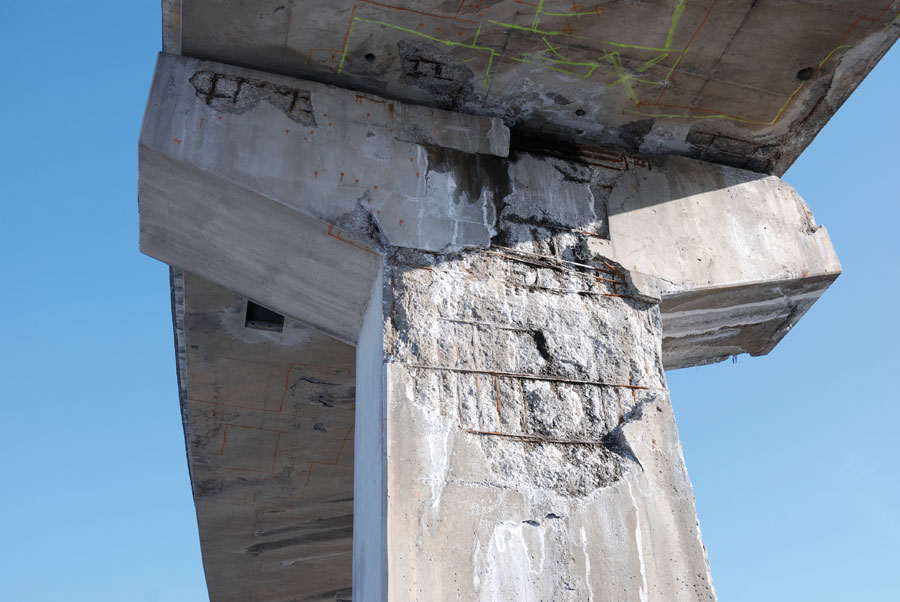 Figure 1. Example of a decaying concrete structure.
Ions filter into the concrete from various external sources including sea water and de-icing salts. These salts penetrate into the concrete and can attack the surface of the reinforcing steel locally inside it. Once the electrochemical reaction has begun there is a volume increase in the reaction products at the surface of the reinforcing steel that creates internal stresses and ultimately cracking of the concrete. Once these cracks reach the surface of the concrete it is easier for water to enter and cause more corrosion or other deterioration (Figure 2).
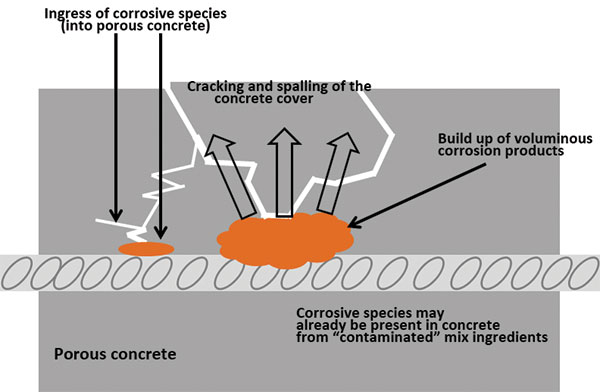 Figure 2. Illustration of the penetration of anionic salts and degradation of concrete and underlying rebar.
Existing solutions
Current test methods use chloride titrations of the powder extracted from concrete adhering to ASTM standard C1152. This testing process is costly and lengthy when considering core extraction all the way to core sub sectioning and pulverization of the cement for testing. An illustration of that process is shown in Figure 3.
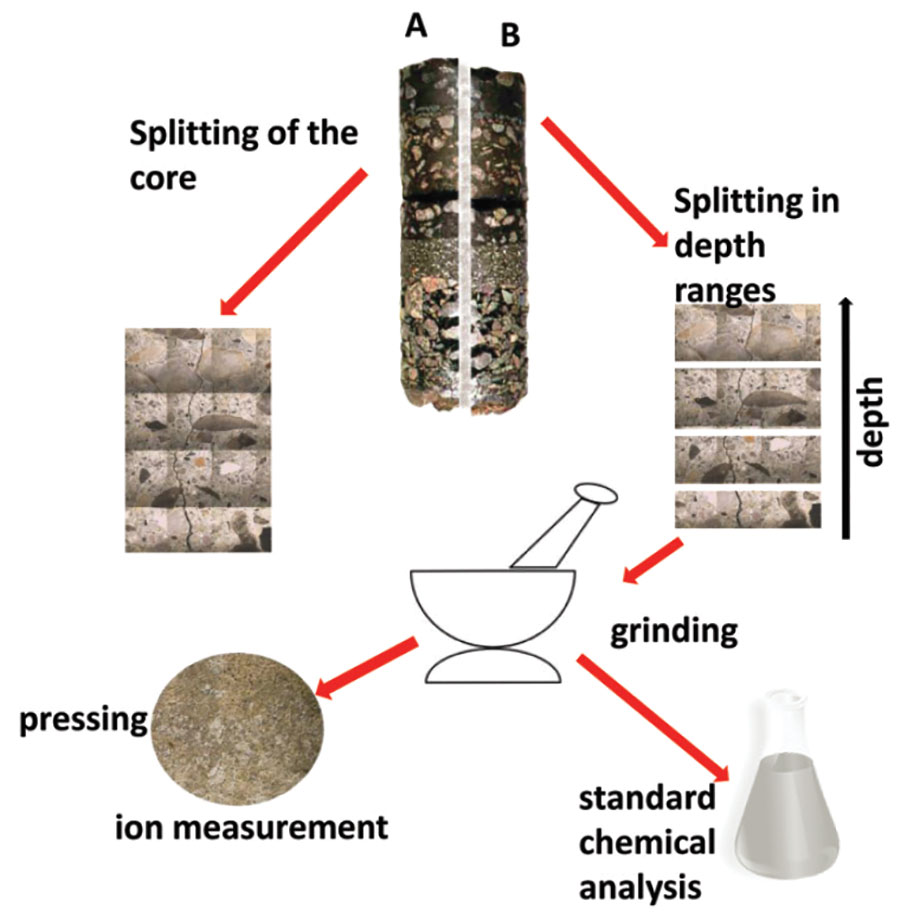 Figure 3. Illustration of current testing methods.
Methods and results
Micro x-ray fluorescence (micro-XRF) is a technique that measures the presence and concentration of elements in a sample. It is similar to bulk XRF except that it focuses the incident x-ray beam to an approximately 30 μm spot resulting in a higher energy flux, which creates greater physical and analytical resolution. Micro-XRF also offers large area elemental mapping of a sample with little to no sample preparation. Using this technique it is possible to quickly detect low and varying concentrations of various ionic species including chlorine. The user can also increase the accuracy and greatly reduce the steps and time needed to investigate cores in concrete. The steps necessary to investigate the chloride content in concrete are summarized below. With micro-XRF the cores need only to be extracted and split before analysis is possible.
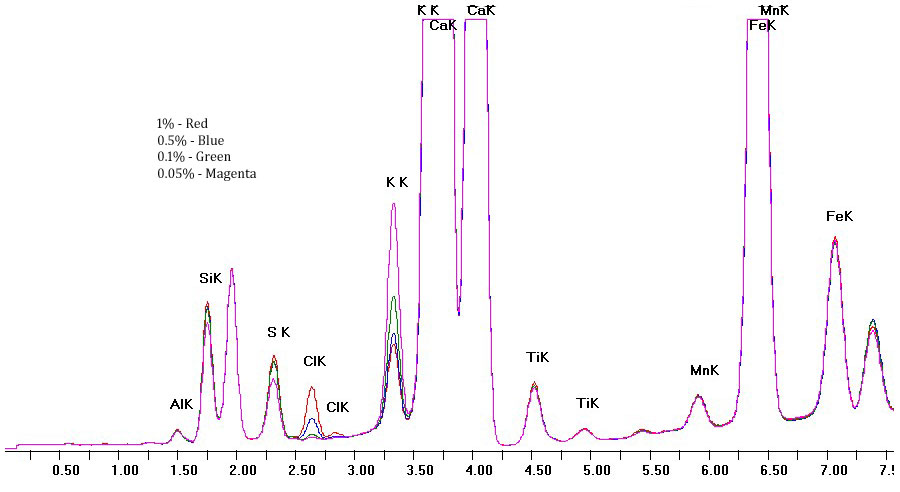 Figure 4. Four concentration overlay.
| Known chlorine concentration |
Measured in weight percent |
| 1% |
0.90% |
| 0.50% |
0.35% |
| 0.10% |
0.09% |
| 0.05% |
0.05% |
Table 1. Quantification results using micro-XRF.
To illustrate the capability of the EDAX Orbis II micro-XRF system to determine chlorine concentrations, samples were prepared with known levels of chlorine in the paste. The resulting samples were a homogenous mixture of concentrations which were 1%, 0.5%, 0.1%, and 0.05% by weight chlorine. The test setup used a polycapillary optic focusing the incident x-rays to a 30 μm spot using an aluminum primary beam energy filter, which further enhanced the chloride photon emissions. Each sample was analyzed using a feature, which maps and counts elements in a large area, then using Fundamental Parameters the chlorine weight percent was determined.
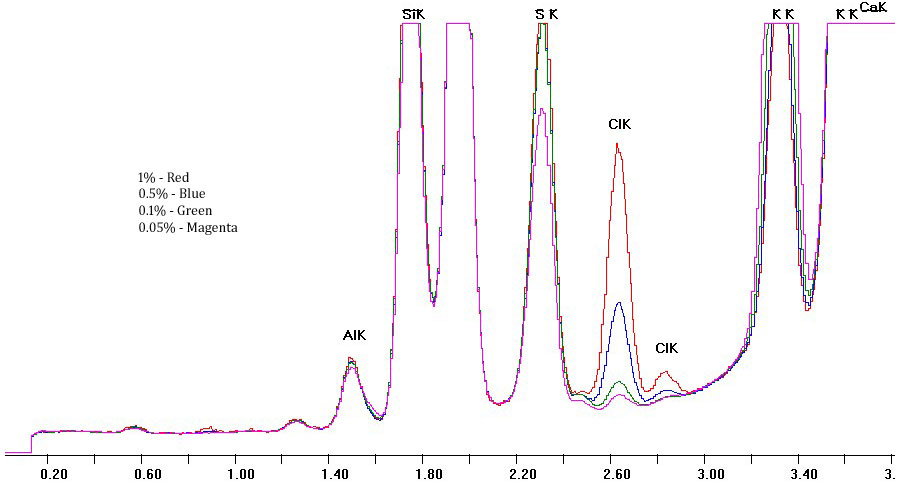 Figure 5. Four concentration overlay with zoom on chlorine.
Conclusion
The spectra in Figures 4 and 5 represent each sample illustrating counts versus energy emission. The interest here is in the chlorine spectral K line at 2.622 eV. Note, peak heights follow sample concentrations. Using the quantitative functions following Fundamental Parameters routines, the weight percent calculations were generated. These test results confirmed micro-XRF as a competitive technique for qualitative and
quantitative analysis with a significant reduction in testing time and steps required.