Introduction
The surface properties of some steel alloys can be adjusted through the introduction of specific elements via diffusion. Nitriding is one such process, where nitrogen is used to create a surface layer of higher hardness to improve strength and wear resistance. While this technique has been used since the early 20th century, its application is growing in popularity due to the lower temperature heat treatment requirements compared to alternative methods. This results in a lower risk of distortion and the resulting associated issues. In this technical note, we will describe how combined energy dispersive spectroscopy (EDS) and electron backscatter diffraction (EBSD) analysis can be used to characterize the microstructure of nitrided steel.
Results and discussion
Figure 1 shows a backscatter electron (BSE) image taken from the nitrided surface of a steel sample. The image contrasts primarily show atomic number or density contrast. The brightest region at the top corresponds to the nickel plating used to help with the mechanical polishing, and the bright region towards the bottom corresponds to the steel microstructure. The darker region between these previous contrasts corresponds to the nitride layer, and the black regions correspond to precipitates and porosity near the sample's edge.
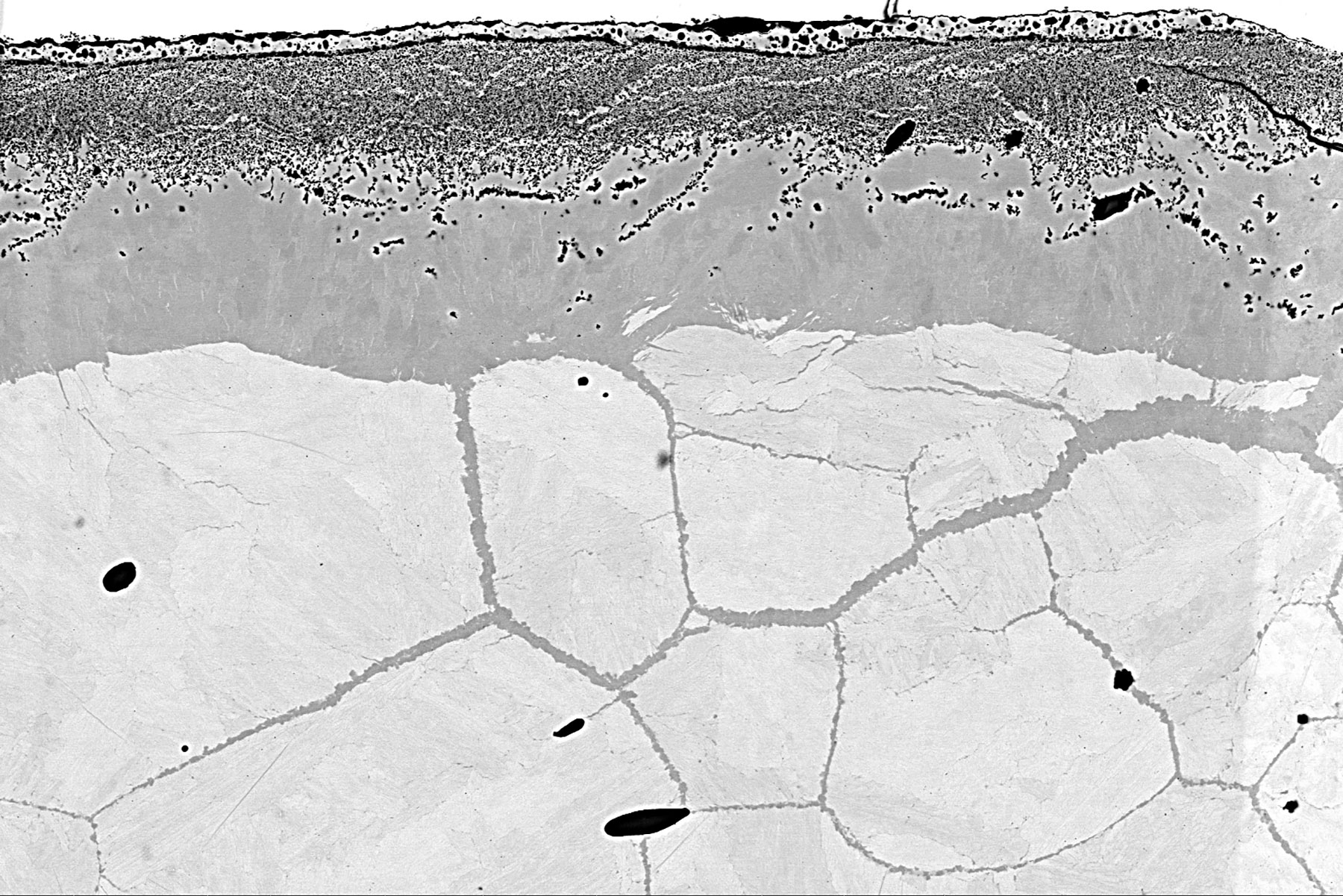
Figure 1. BSE image of the nitrided surface layer of a steel sample.
The EDAX Pegasus system was used to simultaneously collect an EDS and EBSD map from the sample over a 112 μm x 140 μm area using a hexagonal sampling grid with a 125 nm step size. Simultaneous EDS-EBSD data can be collected with any combination of the EDAX Velocity™ and Clarity™ EBSD detectors and Octane Elite or Octane Elect EDS detectors. A primary advantage of simultaneously collecting this data is the direct correlation of the two signals on the same collection grid.
During the collection of the EBSD patterns, regions of interest (ROIs) are defined within the imaged phosphor screen, and the intensity variations within these ROIs are used to generate maps showing different contrasts resulting from the changes in electron diffraction and scattering signals from the sample onto the phosphor screen. This imaging approach is called PRIAS™. Figures 2a-c show the images resulting from the top, middle, and bottom ROIs. The contrast of the top ROI resembles the contrast of the BSE image from Figure 1. The center ROI shows orientation contrast within the microstructure, while the bottom ROI shows stronger topographical contrasts with weaker grain contrast. The availability of all these images helps provide a comprehensive visual overview of the microstructure.
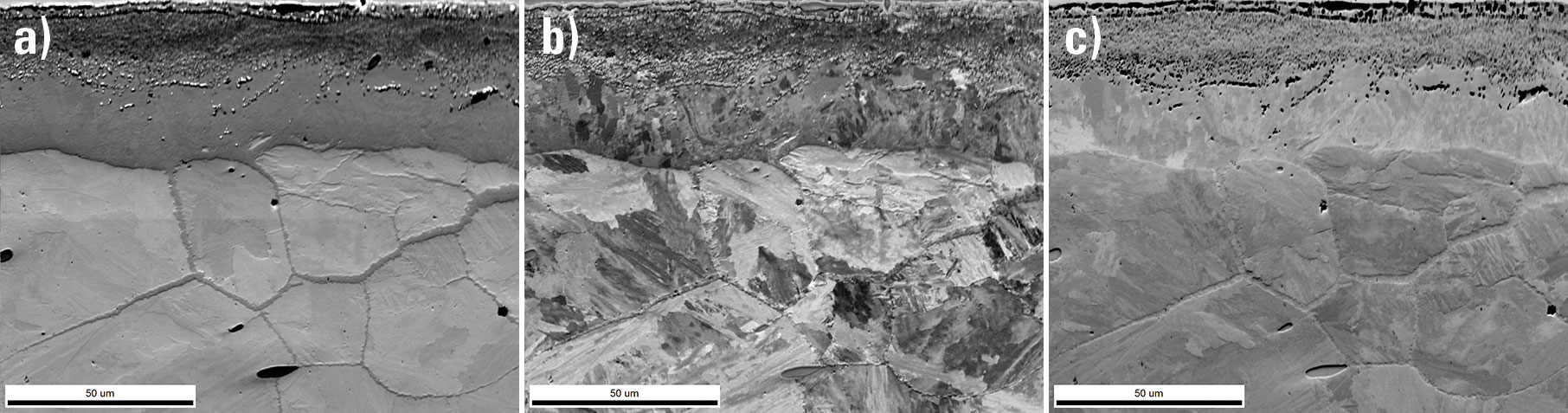
Figure 2. PRIAS™ images from the a) top, b) middle, and c) bottom ROIs showing different microstructural contrasts within the analysis region.
Four primary phases were identified within the mapping area. Ferrite was selected for the steel structure. Note it can be difficult to reliably differentiate cubic ferrite from slightly tetragonal or tempered martensite using EBSD, which is why ferrite was selected. Two different iron-nitrogen phases were detected, a cubic γ' Fe4N and a hexagonal ε Fe3N. A fourth MnS phase was added that matched the primary intermetallic inclusions present.

Figure 3. Phase map before ChI-Scan.
The phase map collected with these structures is shown in Figure 3. The yellow Fe3N is reliably distinguished from the other cubic phases, but there is some ambiguity between the ferrite and MnS phases. This is because they both have a cubic crystal structure with similar diffracting planes. As such, the EBSD patterns are similar and difficult to differentiate.
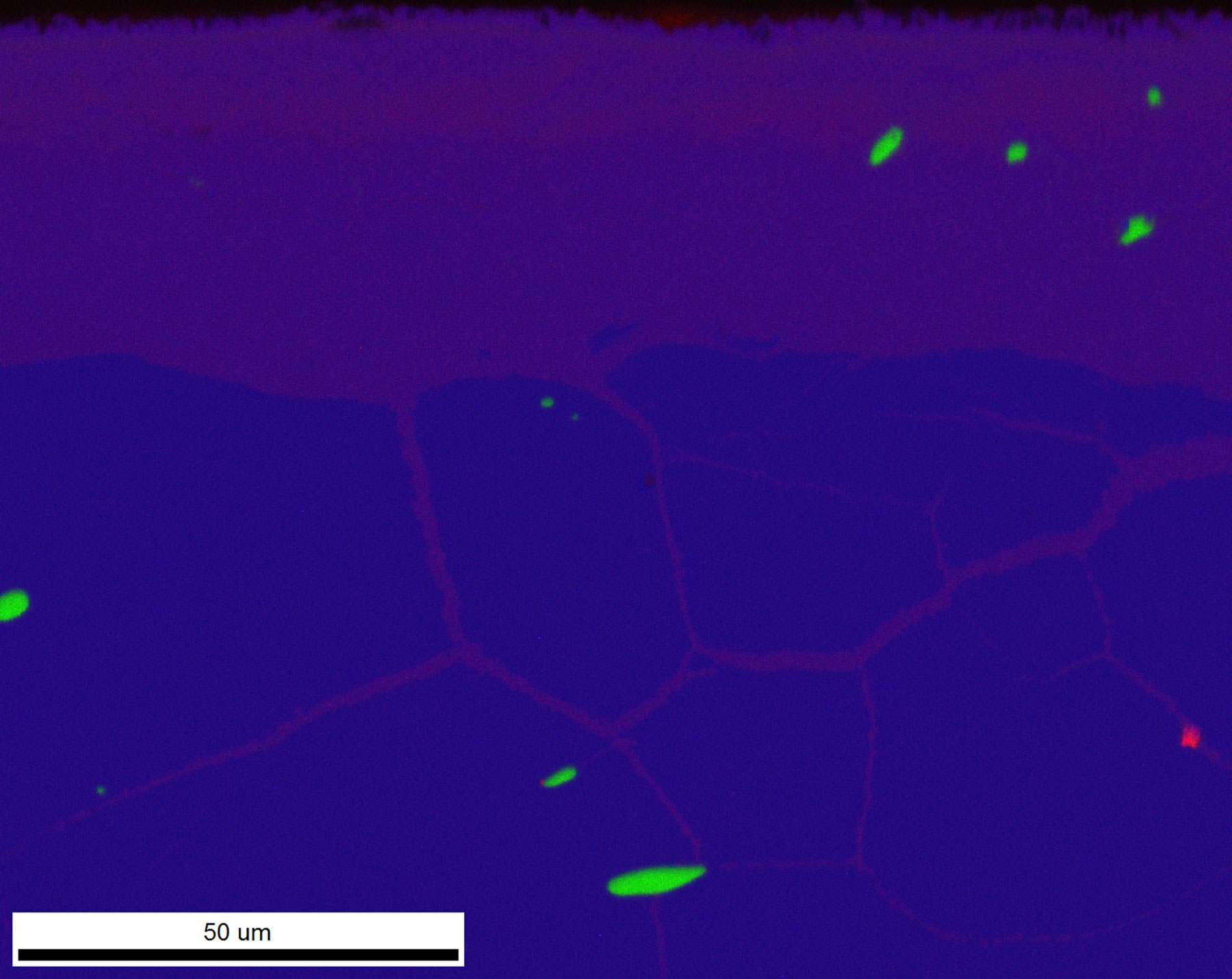
Figure 4. EDS RGB color map, showing iron (blue), nitrogen (red), and manganese (green) superimposed elemental maps
In cases like this, the simultaneously collected EDS data can be used to improve differentiation using ChI-Scan™. With this technique, the local composition determined by EDS is used to select the appropriate crystallographic structure for EBSD pattern indexing. An RGB EDS color map is shown in Figure 4, where iron is colored blue, nitrogen is colored red, and manganese is colored green. This map shows that it is easy to identify the position of the MnS phases within the steel matrix. Using this approach dramatically improves phase differentiation performance, as shown in the phase map in Figure 5 after ChI-Scan is applied.

Figure 5. Phase map after ChI-Scan is applied.
At this stage, the microstructure is now characterized and can be analyzed. The phase map in Figure 5 shows that the outer layer closest to the surface is primarily Fe4N, while the Fe3N phase is located closer to the ferritic steel interface. The phase map also shows veins of intermixed Fe-N phases penetrating deeper into the ferritic steel matrix. Examination of the EBSD image quality (IQ) and inverse pole figure (IPF) orientation map (relative to the surface normal direction) in Figure 6 shows that the veins of Fe-N phases are extending through the boundaries between prior austenite grain boundaries. This suggests that these previous austenite boundaries are faster diffusion pathways for the nitrogen introduced during the processing.

Figure 6. The EBSD IQ and IPF orientation map (relative to the surface normal direction) shows that the veins of Fe-N phases are extending through the boundaries between prior austenite grain boundaries.
The grain size of each constituent phase can also be calculated, and the spatial distribution of the sizes can be shown within the microstructure. This example shows a bimodal grain size distribution within the hexagonal Fe3N phase, with smaller grains near the surface layer and within the inter-packet grains and larger grains closer to the cubic Fe4N interface. Grain shape analysis is also available, with some regions of equiaxed grains combined with regions of more elongated grains near the steel interface. Information about the grain size and shape can help understand the nitride layer's growth kinetics during processing.
Conclusion
These results show that combined EDS-EBSD data can be used to characterize and understand the development of microstructure through the nitriding process. This information can then be used to configure the nitriding parameters for optimal surface case hardening properties and improved materials performance.