Introduction
Historically, the detection of light elements using energy dispersive x-ray spectroscopy (EDS) has been limited by window materials that attenuate low energy x-rays. Over the past decades, advancement in window technologies has seen a transition from beryllium to polymer and eventually to thin silicon nitride windows, extending reliable detection capability of the EDS technique to the aluminum L line (73 eV). Despite this progress, the latest generation of window materials still suffer from significant attenuation of low energy x-rays, e.g., 50% attenuation of nitrogen signal and 90% of boron signal. However, the newly developed EDAX® Octane Elite Ultra windowless detector represents a further significant leap forward, eliminating window-induced attenuation and enabling detection of low energy emissions with significantly enhanced signal-to-noise ratio.
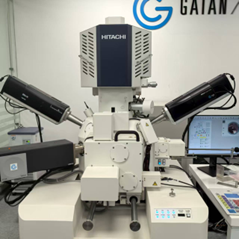
Figure 1. Octane Elite Super (top left) and Octane Elite Ultra (right) were installed on a Hitachi SU7000, collecting simultaneously. The SEM is also equipped with the Cipher® system allowing the lithium content of samples to be revealed.
Materials and methods
The performance of the windowless Octane Elite Ultra detector was evaluated using a Hitachi SU7000 scanning electron microscope (SEM) equipped with two EDS detectors: the Octane Elite Super (70 mm2, silicon nitride window) and the Octane Elite Ultra (160 mm2, windowless), as shown in Figure 1. A side-by-side comparison was made, with the two detectors operating simultaneously, eliminating possible variation caused by a change in the experimental conditions. A high-entropy alloy sample containing boride inclusions was selected for analysis due to its complex composition and the challenge of detecting boron.
A high-entropy alloy sample containing boride inclusions was selected for analysis due to its complex composition and the challenge of detecting boron.

Figure 2. Elemental maps of a high-entropy alloy under 20 kV collected at 256 x 200 pixels and total exposure time was 3 min 40 s.
Results and discussion
Initially, elemental maps were captured using an accelerating voltage of 20 kV. Maps of Si, Fe, Co, Ni, and Cu were captured with acceptable signal-to-noise ratio (SNR) however, the boron distribution could not be observed (Figure 2). At this experimental condition, x-rays are generated within a few microns of the sample surface and, to escape the sample for detection, must avoid reabsorption to contribute to the detected signal. Re-absorption can be extremely severe for low energy x-rays, such as boron.
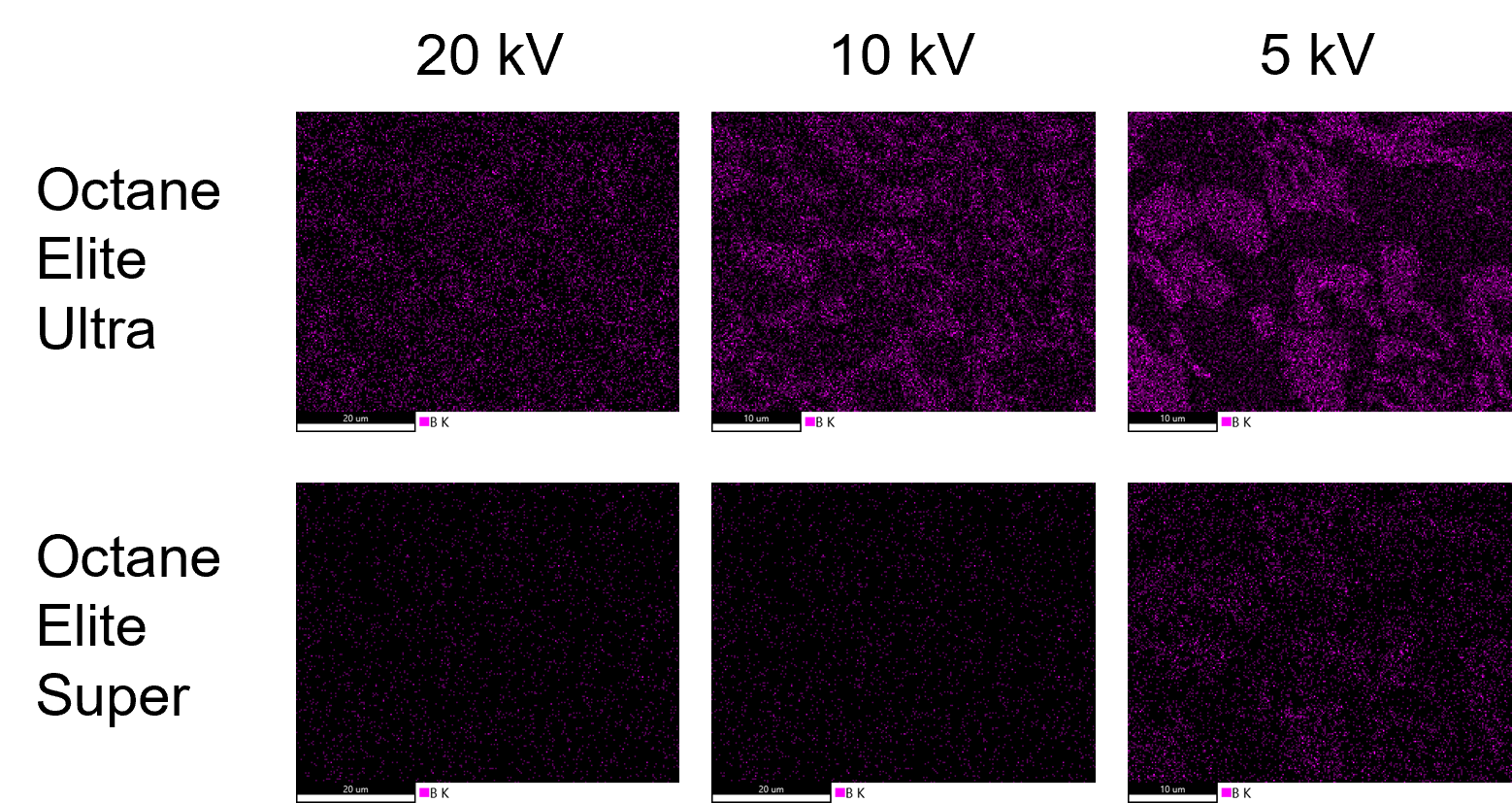
Figure 3. Elemental maps of B under different voltages.
In order to minimize the effects of re-absorption, the accelerating voltage of the SEM was lowered ensuring that x-rays that were generated traveled less distance through the sample before escaping. A comparison of the boron map collected at accelerating voltages of 20, 10, and 5 kV is shown in Figure 3; the pixel density and acquisition time are the same in each case. As expected, a significant improvement in the SNR was observed at lower accelerating voltages for both detectors. The distribution of boron-rich phases could be observed in maps collected by the Octane Elite Ultra when they could not be using the Octane Elite Super due to an 8x improvement in the SNR of the boron map collected by the Ultra model at 5 kV. However, after a longer time, the Octane Elite Super can also obtain a clear element map of B (Figure 4).
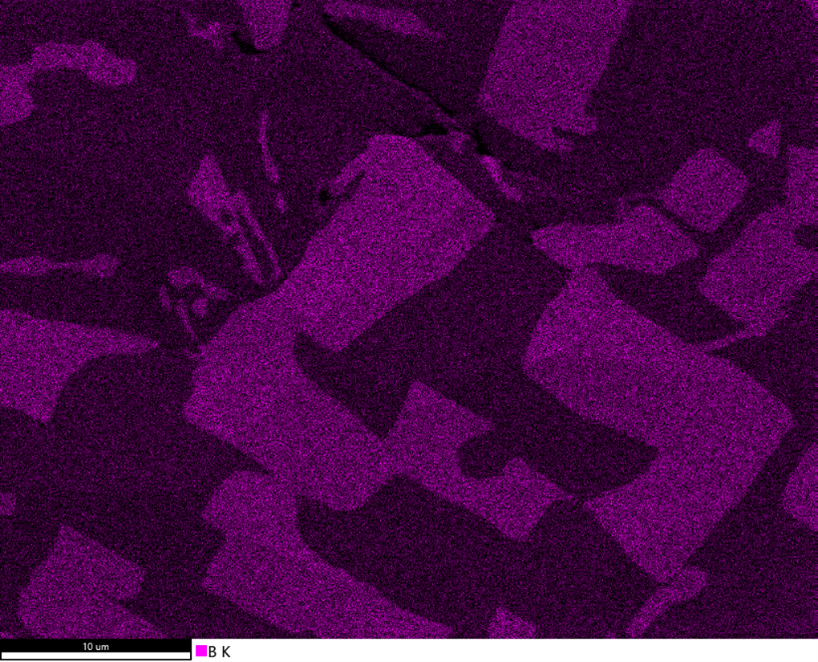
Figure 4. Boron elemental map collected with the EDAX Octane Elite Super using an accelerating voltage of 5 kV. Total acquisition time 55 min.
Finally, analysis conditions were identified to produce elemental maps optimized for their SNR; an accelerating voltage of 3 kV and total acquisition time of 28 min were used. Under these settings, the standard x-ray lines for the transition metal elements could not be used as the energy of the electron beam was insufficient to excite these transitions, so the L lines were used instead; features <100 nm were observed.
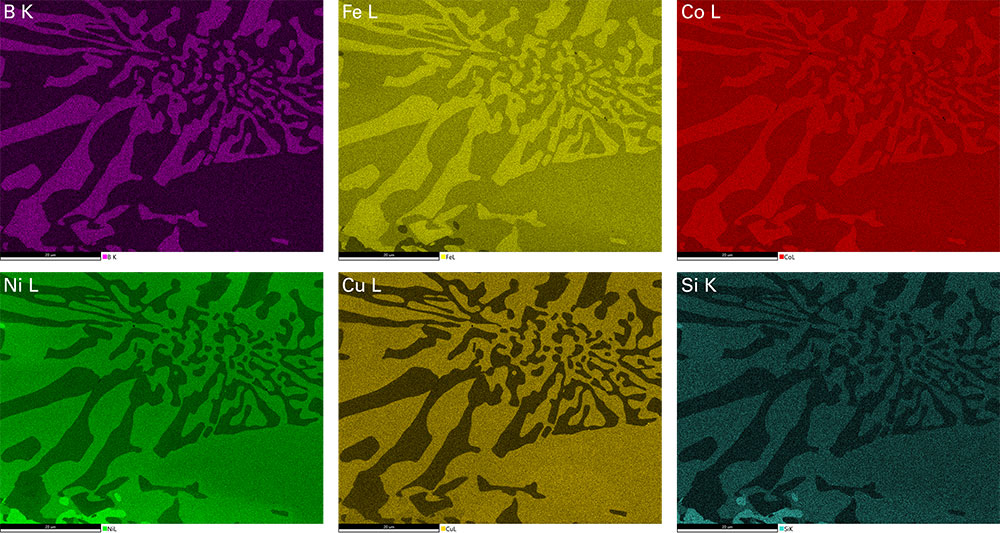
Figure 5. Elemental maps of the elements under 3 kV with the Octane Elite Ultra.
Conclusion
The windowless design of the Octane Elite Ultra detector eliminates barriers to low-energy x-ray transmission, significantly enhancing the detection of low energy x-rays from light elements and the L lines of transition metal elements. Its large active area further contributes to increased signal collection, making it particularly effective for analyzing complex materials. An improvement in SNR of up to 8x was demonstrated compared to traditional large-area windowed EDS detectors. These improvements suggest promising applications in materials science, metallurgy, and semiconductor research enabling analysis at low accelerating voltages to be performed routinely.