Dr. David Stowe, Product Manager, Gatan/EDAX
Helping my son with his chemistry homework is usually a delightful experience. Recently, we embarked on a fascinating journey that started with the colorful world of flame tests and led us to my professional career—the advanced techniques of energy dispersive x-ray spectroscopy (EDS) and wavelength dispersive x-ray spectroscopy (WDS).
The wonder of flame tests
It all began with a simple yet captivating experiment in his chemistry class: the flame test. My son was amazed to see how different elements produced different colors when introduced to a flame. Sodium gave off a bright yellow flame, while copper produced a stunning greenish-blue hue. This experiment he witnessed at school was obviously captivating, as he described his experience enthusiastically when he returned home that evening. Thus far, my professional career in analytical sciences had been completely uninteresting to him; I wasn’t going to miss this opportunity to connect my day-to-day work with his newfound excitement from his chemistry class.
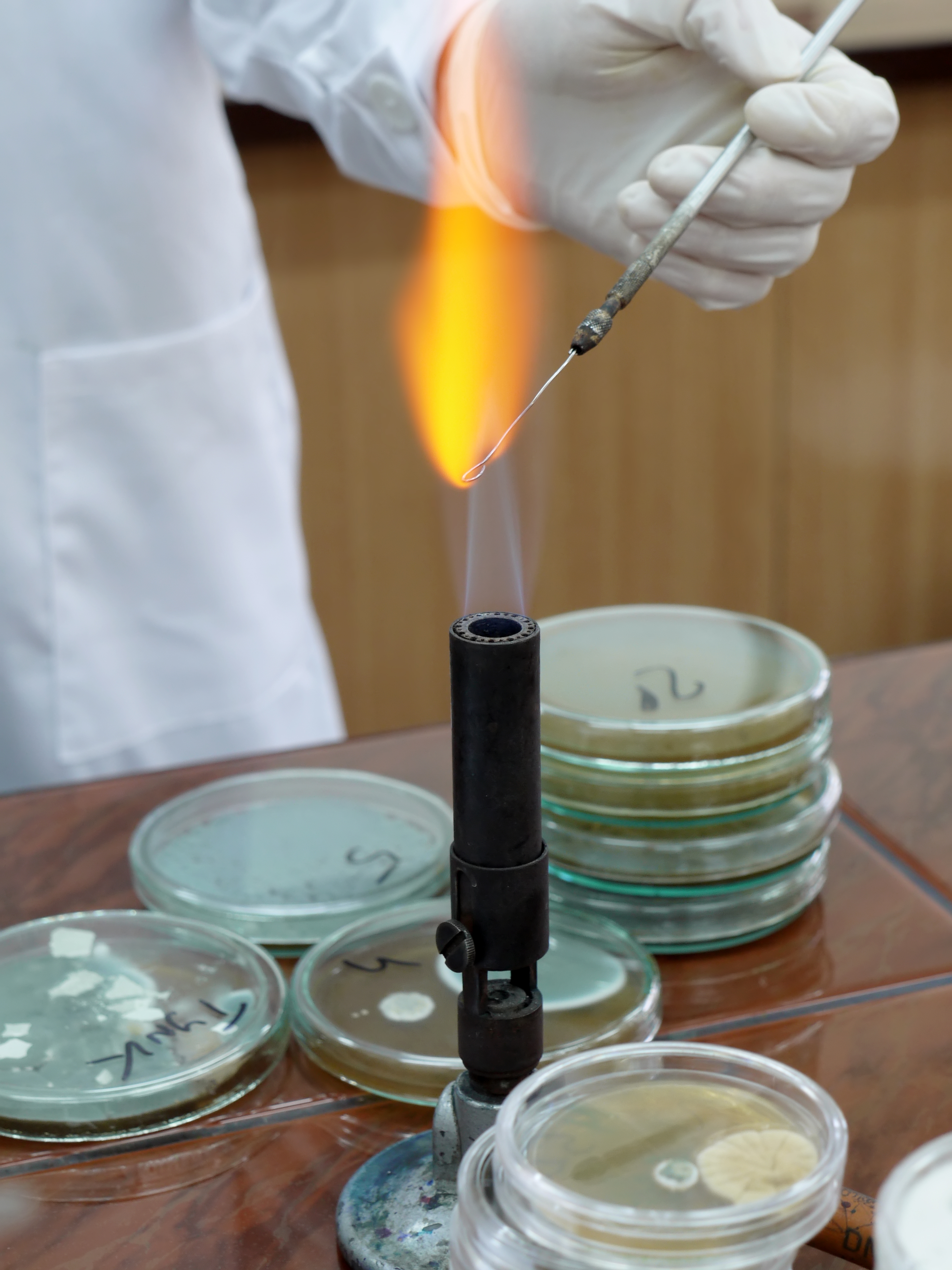
Figure 1. Example of a chemistry class flame test.
From flame tests to WDS: Discriminating elements in chemistry
The journey from a simple flame test to the sophisticated technique of WDS is a fascinating one. Both methods are rooted in the fundamental principle of emission spectra, but they serve different purposes and offer varying levels of precision and detail.
The basics of flame test
In a flame test, a sample is introduced to a flame, causing the electrons in the atoms to become excited. As these electrons return to their ground state, they release energy in the form of light. The color of this light is characteristic of the element present in the sample. For example, sodium produces a bright yellow flame, while copper yields a greenish-blue hue.
Flame tests are a great way to introduce the concept of emission spectra and the idea that each element has a unique "fingerprint." However, they are primarily qualitative and can be influenced by the presence of multiple elements, making it challenging to accurately identify and quantify elements in a complex mixture.
Advancing to WDS
WDS takes the principles of elemental analysis to a much higher level of precision and detail. Instead of visible light, WDS uses x-rays to identify and quantify elements in a sample.
In WDS, an electron beam is directed at a sample, causing the atoms to emit x-rays. These x-rays are then diffracted by a crystal, and the resulting wavelengths are measured. Each element emits x-rays at specific wavelengths, allowing for precise identification and quantification.

Figure 2. An overlay of EDS (red outline) and WDS (cyan color) spectra of an alloy sample at 5 kV.
Connecting flame tests and WDS
Both flame tests and WDS rely on the emission of electromagnetic radiation (light or x-rays) by excited atoms, but they differ significantly in their applications and capabilities: WDS is quantitative rather than qualitative, allowing for precise measurement of elemental concentrations and requires sophisticated instrumentation that EDAX makes to be used in advanced scientific and industrial applications.
It was thrilling to share snippets of the ways in which our customers make use of the tools we manufacture. Relaying fascinating experiments that our customers perform daily, such as understanding how meteorites were formed four billion years ago at the inception of the formation of our solar system or how improvements to the materials used in a nuclear reactor or semiconductor chip used inside his laptop can make a difference.
Conclusion
By exploring these topics together, we not only completed his homework but also sparked a deeper interest in the world of chemistry and materials. It was a wonderful reminder of how a simple classroom experiment can spark an interest in the discovery of advanced scientific techniques and the excitement that it brings. Frequently, I see the same reaction on the faces of our customers when realizing that our Lambda WDS systems can help them solve critical problems that they have been unable to address by EDS alone; whether it’s discriminating between two or more elements that are ‘overlapped’ or revealing the distribution of elements at trace levels.
More than anything, the experience reminded me that, when done well, communicating complex scientific principles from our professional lives to our loved ones can be exciting.