Matt Nowell, EBSD Product Manager, Gatan/EDAX
Recently, I analyzed a customer sample using spherical indexing in EDAX OIM Matrix™ to improve indexing performance on a shot-peened nickel alloy. Rather than just jumping into the electron backscatter diffraction (EBSD) work, I started with the sample in a typical geometry for scanning electron microscope (SEM) imaging (e.g., flat) to use the different SEM imaging detectors to get a feel for the microstructure. While imaging with the annual backscatter (ABS) detector, a particular precipitate caught my eye, as shown in Figure 1. I immediately named it the Happy Pirate grain and decided I wanted to collect more information from the region of interest.
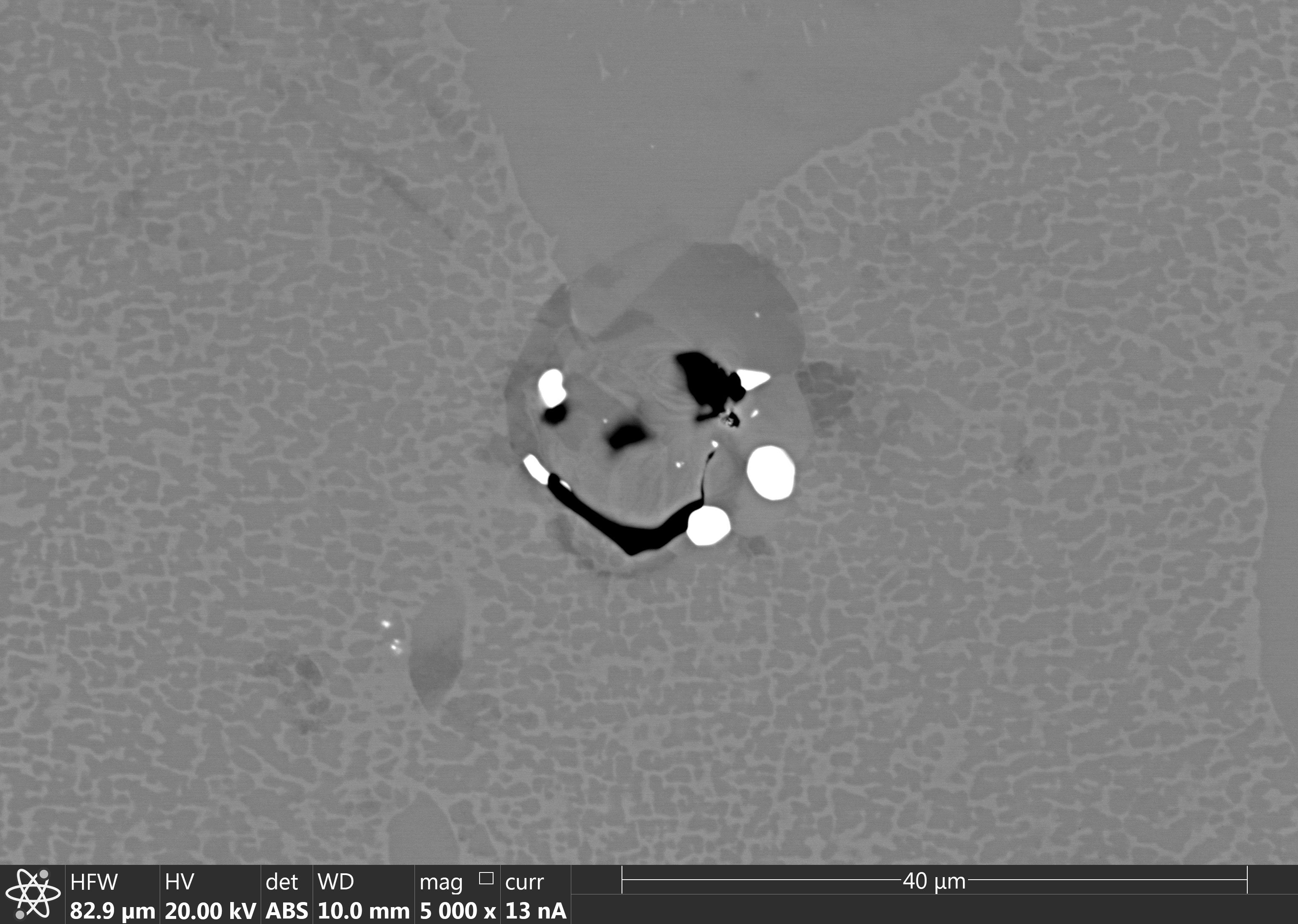
Figure 1. SEM image of the Happy Pirate grain using the ABS detector.
I collected an EBSD map from the region using an EDAX Velocity™ Ultra EBSD detector. The EBSD image quality (IQ) map is shown in Figure 2. It is interesting to compare the imaging contrasts revealed by these two different imaging approaches. The sample was prepared for EBSD analysis, so the ABS image in Figure 1 shows atomic number contrast and some orientation channeling contrast. The bright areas in Figure 1 would be regions of higher density. In the IQ map, these grains are darker. The contrast in the IQ map is derived from the brightness and sharpness of the detected bands in the EBSD pattern using the Hough transform for band detection, with the highest quality patterns shaded brighter. This indicates that the EBSD patterns from these higher-density grains are of lower quality than the rest of the area. The substructure within the Happy Pirate grain is better revealed by imaging the grain boundaries wall within the grain.
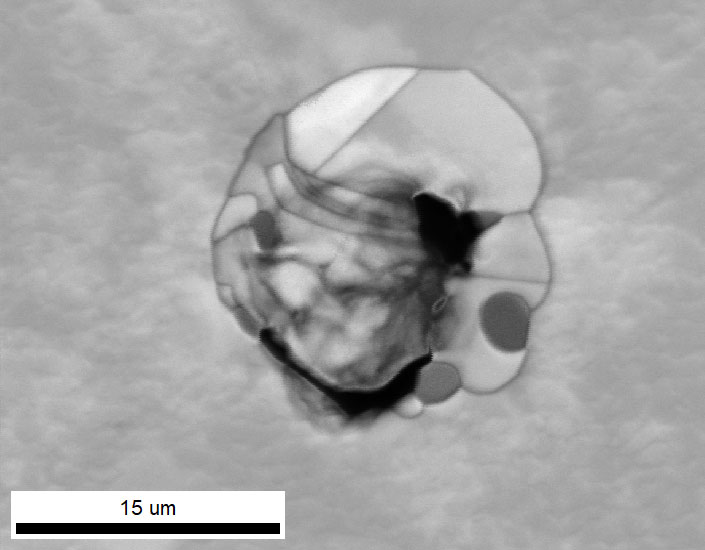
Figure 2. EBSD IQ image of the Happy Pirate grain obtained using the Velocity Ultra EBSD camera.
The EDAX PRIAS™ technology offers unique imaging capabilities by using the EBSD detector as an imaging detector while simultaneously analyzing EBSD patterns for orientation and phase information. For PRIAS imaging, different regions of interest (ROIs) are defined within the EBSD pattern, and the signal intensity variations within these ROIs are used to create images while collecting EBSD mapping data. Figure 3 shows a PRIAS map from an ROI placed at the top of the EBSD pattern. In this geometry with a tilted EBSD sample, the PRIAS map produces an image with strong atomic number contrast while reducing the amount of orientation channeling contrast compared to Figure 1. Figure 4 shows a PRIAS map from a centered ROI where some orientation contrast is added to the atomic number contrast. Figure 5 shows a PRIAS map from an ROI at the bottom of the EBSD pattern. Here, atomic number contrast has been minimized, and orientation contrast has been enhanced. All three of these PRIAS images are created and captured automatically during EBSD mapping to offer different imaging information to complement the orientation information collected. Defining other ROIs using saved EBSD patterns to extract more information is also possible.
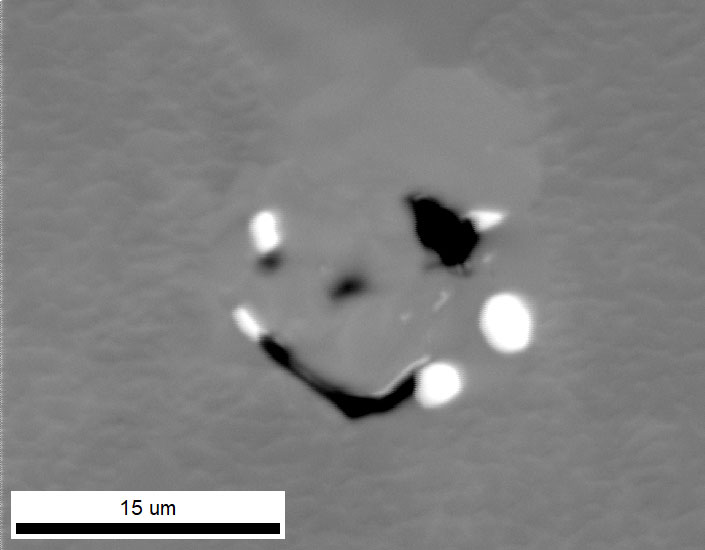
Figure 3. A PRIAS map from an ROI placed at the top of the EBSD pattern.
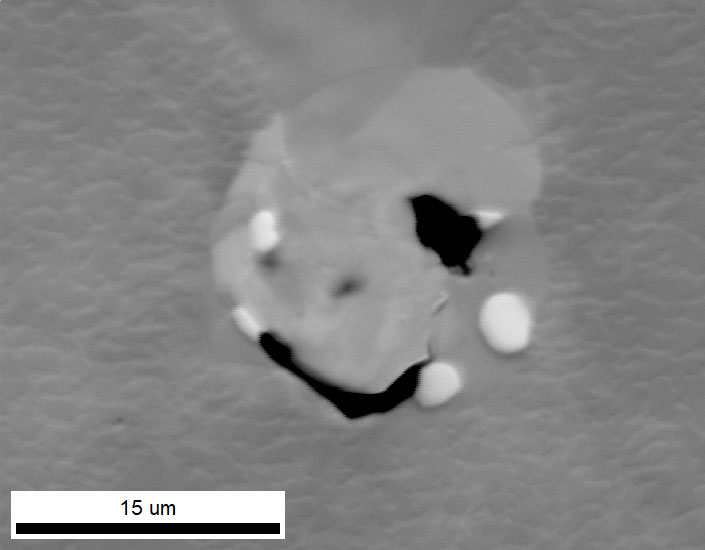
Figure 4. A PRIAS map from a centered ROI where some orientation contrast is added to the atomic number contrast.
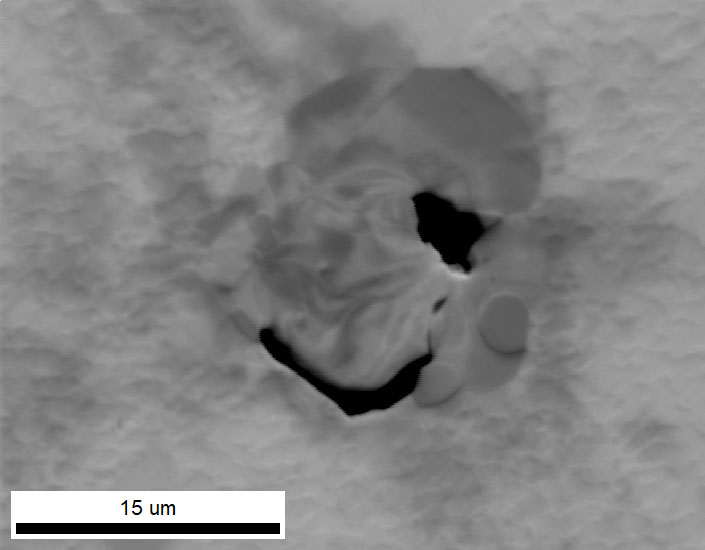
Figure 5. A PRIAS map from an ROI at the bottom of the EBSD pattern.
Figure 6 shows the IPF (normal direction) orientation map collected by analyzing the EBSD pattern with spherical indexing and using the generic face-centered cubic (FCC) master pattern material file. Here, we see that our pirate grain is a collection of grains of different orientations. We can also see that the perimeter grains appear to have less internal misorientation than the internal grains. We can visualize this better using the kernel average misorientation (KAM). Figure 7 shows the KAM map in color combined with a grayscale spherical indexing confidence index (CI) map. The CI map shows the outline of the pirate grain structure relative to the surrounding microstructure. In contrast, the colored KAM map shows the localization of the low-angle grain boundary structure with the high angular precision that can be achieved with spherical indexing.
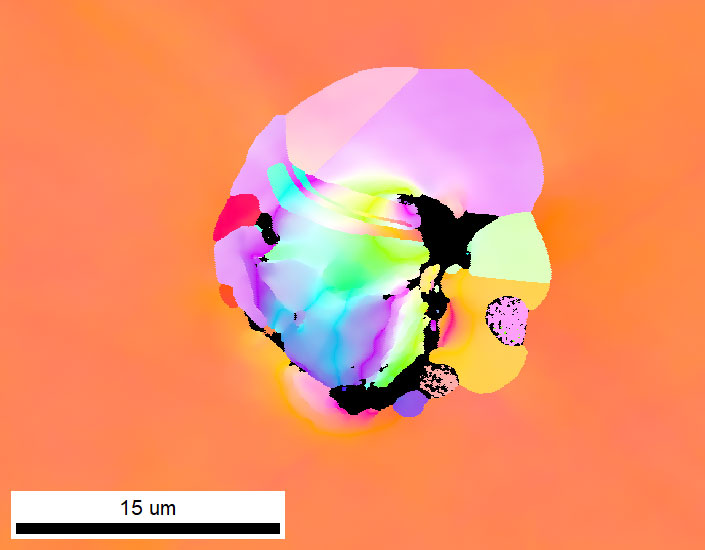
Figure 6. The IPF (normal direction) orientation map was collected by analyzing the EBSD pattern with spherical indexing and using the generic FCC master pattern material file.
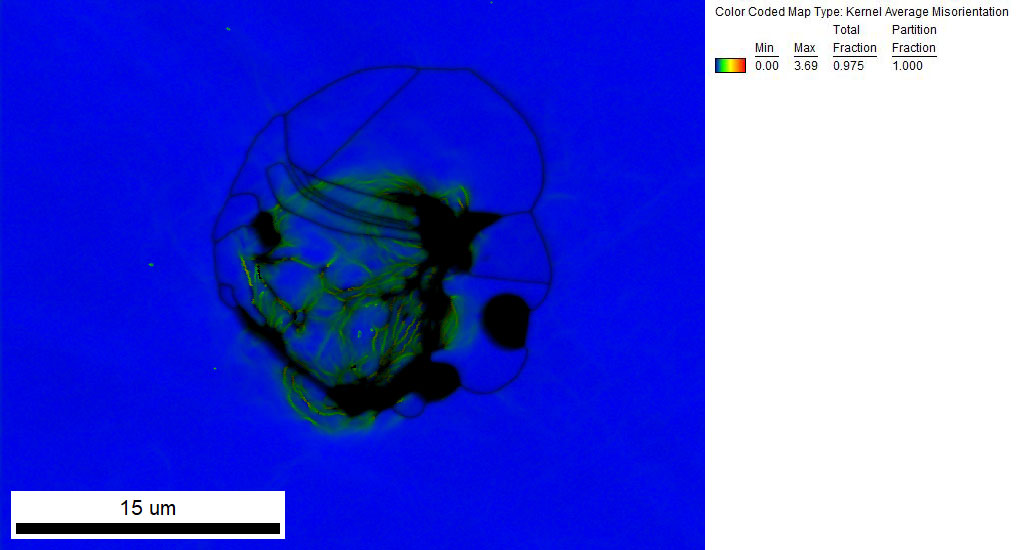
Figure 7. The KAM map in color combined with a grayscale spherical indexing confidence index (CI) map.
These images demonstrate how EBSD mapping can capture a wide range of information communicated through different types of output images. Often, these images complement each other to tell a more complete story about the microstructure. In this case, we learned more about a polycrystalline pirate grain and his smile, which is deforming his interior. At least that’s my story, and I’m happy about it.